



Dying to Work’ at Santander
Telecoms & Financial Services October 3 2016 Santander has today become the first major employer of CWU members to sign the Dying to Work Charter’ – a TUC initiative that aims to ensure that terminally ill workers are treated with dignity and given the support they need to continue in the workplace for as long as they wish.
The Charter stipulates how employers can support terminally ill workers following their diagnosis and is part of the TUC’s wider Dying to Work campaign, which is seeking greater security for terminally ill workers through a protected period’ wherethey cannot be dismissed as a result of their condition.
Amongst those present at Santander’s signing ceremony, which took place at the bank’s London HQ on October 3 (pictured), was CWU NEC member and ALGUS National branch secretary Debbie Cort who instigated the successful approach to Santander management that led to the company becoming the first UK bank to put its name on the dotted line.
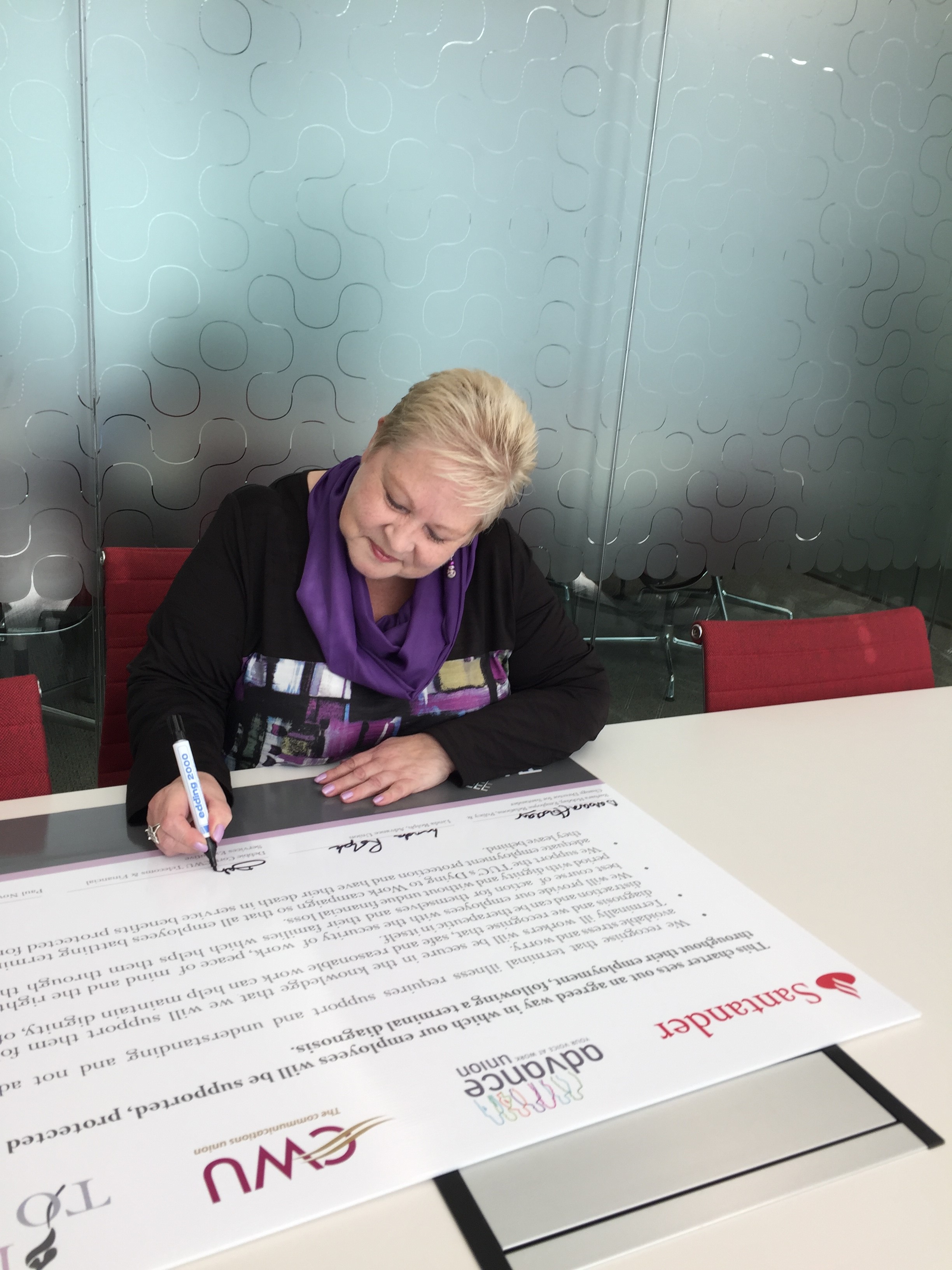 Debbie told The Voice: “This is a voluntary Charter for employers to sign up to, giving commitments to treat terminally ill workers with dignity and respect.
“Tragically, more and more peoplein work arebeing struck down by a terminal illness, and it is very important that they are allowed dignity and financial security in the final stage of their life.
“Santander has a good track record of dealing withterminally ill workers in a sympathetic manner, and I’m really pleased that they are making a public commitment to this by signing the TUC’s Dying to Work Charter’.”
The CWU first threw its weight behind the Dying to Work campaign in 2015 when Annual Conference delegates unanimously agreed terminally ill workers need greater protection from heartless employers who are utilising a loophole in the law to dismiss the dying due to their illness.
The loophole stems from the fact that the terminally ill are not classified as having a Protected Characteristic’ as defined by the Equality Act – meaning that employers are technically free to dismiss terminally ill workers once they have made ostensibly made reasonable adjustments’ to the employee’s job to assist with the illness.